Showing posts with label Historical Fiction. Show all posts

Sunday, June 10, 2012

Bring up the Bodies by Hilary Mantel

 Click to hear an excerpt of the audiobook from Macmillan Audio.


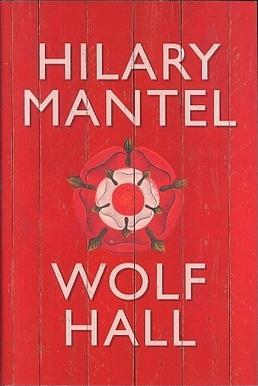
Last year I read Hilary Mantel's Booker Prize winning novel about Thomas Cromwell and I have to say that Wolf Hall was one of the most memorable reads of the year.  Initially it took me a bit to get into Wolf Hall; once I had the time and opportunity to immerse myself in the novel I quickly grew to love it. 

Bring up the Bodies is Hilary Mantel's sequel to Wolf Hall and details the fall and execution of Anne Boleyn.  This is an absolute cliff-hanging, nail-biter of a novel.  I'm assuming that we all know that Cromwell quickly rose to power as Henry the VIII's secretary, assisted in bringing about Henry's marriage to Anne Boleyn, played a vital role in the downfall, trial, and execution of Anne Boleyn, and was eventually executed after the entire Anne of Cleves debacle.   

Wolf Hall was a patient, beautifully-written, "slow-build" sort of novel composed of many historical characters with differing loyalties, backgrounds, and emotions that had to be put into place.  This is the elaborate stage being set and Bring up the Bodies is a fast-paced, bloody, suspenseful play.  The end of the trilogy, I'm predicting, will be a most violent denouement. 

Mantel succeeds in writing both an engaging external plot -- with all of the spying and affairs and head chopping and such -- and masterfully writing an engrossing internal plot.  I'm just as interested in what is going on in Cromwell's head as much as I am interested in the next alleged suitor's downfall.  There is one particular part of the novel where the tension is so pitch-perfect and I literally found myself holding my breath.  Henry is injured in a jousting tournament and is believed dead.  In a few brief pages Cromwell is at Henry's bedside in a tent and he is very aware of everything going on:  the Boleyns are puffed up and ready to rule, Lady (Princess) Mary is in danger, a person to govern for Ann's unborn child needs to be decided, he must ensure that Anne doesn't rule, and the entire country is on the brink of civil war.  Cromwell is surrounded by enemies and if the King falls Cromwell is nothing.  Well, most likely he will be dead.  Luckily, Henry lives and Cromwell manages to quell any rising arguments for the time being.  It was an intense scene.

The action isn't the only thing going for Bringing up the Bodies, the writing is still amazing even when disgusting.  Here is a snippet of a description of Anne Boleyn from early on in the book:
"Anne was wearing, that day, rose pink and dove grey.  The colours should have had a fresh maidenly charm; but all he could think of were stretched innards, umbles and tripes, grey-pink intestines looped out of a living body; he had a second batch of recalcitrant friars to be dispatched to Tyburn, to be slit up and gralloched by the hangman.  They were traitors and deserved the death, but it is a death exceeding most in cruelty.  The pearls around her neck looked to him like little beads of fat, and as she argued she would reach up and tug them: he kept his eyes on her fingertips, nails flashing like tiny knives." (page 38, unpublished review copy)
 Although physical violence is the very fiber of this novel, it is the psychological gameplay, the interrogations, and sense of ending time all written with style, wit, and power that deepens the suspense of the plot.  A fascinating, engrossing, and quick read, Bring up the Bodies has me both yearning and dreading the final book.  The last book detailing Cromwell's demise is sure to be filled with violence, conflict, and some damn fine writing.

Full Disclosure:  A copy of this book was provided by Macmillian for review.  

Thursday, December 1, 2011

How to Read Wolf Hall by Hilary Mantel

Do you ever "save" books?  I have a dozen or so lust-worthy books that I'm rabid to read, but then something stops me.  I want to wait for the right time, the perfect reading experience; essentially, I want to savor the reading experience and make it last.  So the books go one a shelf to age like a wine or a cheese or something equally delicious (sourdough?).  I periodically pick up the book, thumb-through the pages, and then back on the shelf.

Wolf Hall was at the top of the To Read and be Savored pile.  A Christmas gift from a fellow book nerd friend, Wolf Hall has sat on my shelf since December of 2009.  The novel is about Thomas Cromwell, born to an abusive blacksmith, Cromwell rises to power first as adviser to Cardinal Wolsey and then as an agent of Henry the VIII.  As one who loves literary historical fiction (especially related to this time period) I knew I would love this novel.  I finally decided that Wolf Hall was ready to be read this year.  I've on my nightstand since January and it wasn't until November that I decided it was time for Wolf Hall. 

I eagerly began reading and discovered.... 

I didn't like the book AT ALL.

Mantel switches point-of-view a great deal, meaning I found myself rereading passages to decipher who "he" could be and Mantel tends to switch between internal and external dialogue without making it clear to the reader.  Let me clarify, it is beautifully written, but lacks the narrative ease of most historical fiction.  I would say that most historical fiction is "plot-driven" or focused on describing historical "character"; Wolf Hall has an interesting plot and intriguing characters, but truly the writing is what shines.

Then I realized that my approach to Wolf Hall was completely wrong.  I was reading it on lunch breaks or on the floor while Atticus played or when I was sleepy at night.  Scratch that.... I followed a simple formula for The Reading of Wolf Hall and it worked, I loved the novel. 

I present to you, instructions for reading Wolf Hall:

  •  Ideal conditions include the evening hours before you get sleepy.  Grey and cold weather are a plus.
  • Step one:  tuck the kids in bed.  Send the husband off to do something arty.
  •  Step two:  Brew a large pot of tea.  I would highly recommend Harney & Sons Fine Tea Tower of London blend.
  • Step three:  Sit in a comfy, but-not-too-comfy chair.
  • Step four:  Open book
  • Step five:  crawl into book 
  • Step six: live inside sixteenth century England for a solid two hours or more
  • Step seven:  reemerge, shake your head, and try to reacquaint yourself with new-fangled modernity
Truly a book to savor, Wolf Hall is not to be rushed.  Finding yourself plunged into the machinations of Thomas Cromwell's mind and living the drama of the Reformation and Henry the VIII's court will tickle your nerd-fancy.   I know that when I finished Wolf Hall I was more than ready for Hilary Mantel to finish the sequel now.  RIGHT NOW.  Although to be honest, it will most likely sit on my bookshelf for goodness knows how long until just. the. right. time.

Thursday, November 10, 2011

Thursday Thirteen: The Truth in Fiction Edition

I'm feeling bookish lately which has led to tons of meandering around on GoodReads  I have more book lists than you can shake a stick at.  Below are some bookish pairs I'd like to read. The first book is fiction and the second book is a non-fiction work that relates -- by varying degrees -- to the fiction books:


Pair #1:  Our Mutual Friend by Charles Dickens and Charles Dickens: A Life by Claire Tomalin

Pair #2  The Professor by Charlotte Bronte and The Life of Charlotte Bronte by Elizabeth Gaskell

Pair #3:  This Side of Paradise by F. Scott Fitzgerald and Zelda: A Biography by Nancy Milford


Pair #4:  The Queen of Last Hopes: The Story of Margaret of Anjou by Susan Higginbotham and The Wars of the Roses by Alison Weir

Pair #5:  Year of Wonders by Geraldine Brooks and London: The Biography by Peter Ackroyd

Pair #6:  The Murder of Roger Ackroyd by Agatha Christie and The Poisoners Handbook: Murder and the Birth of Forensic Medicine in Jazz Age New York by Deborah Blum


Pair #7:  Love in a Cold Climate by Nancy Mitford and The Sisters:  The Saga of the Miford Family by Mary S. Lovell

Pair #8:  The Black Prince by Iris Murdoch and Iris Murdoch: A Life by Peter J. Conradi

Pair #9:  Autobiography of Henry VIII by Margaret George and The Tudors: The Complete Story of England's Most Notorious Dynasty by G.J. Meyers


Pair #10:  Man and Wife by Wilkie Collins and Wild Romance:  A Victorian Story of a Marriage, a Trial, and a Self-Made Woman by Chole Schama

Pair #11:  All Passion Spent by Vita Sackville-West and The Letters of Vita Sackville-West and Virginia Woolf

Pair #12:  The Complete Shorter Fiction of Virginia Woolf and Virginia Woolf by Hermione Lee

Pair #13:  Richard III by William Shakespeare and Shakespeare's Kings: The Great Plays and the History of England in the Middle Ages 1337-1485 by John Julius Norwich

Friday, August 5, 2011

Readerly Rambles: 08/05/2011


What I've Finished:

My reading has been clipping along at a lovely pace -- well, for me at least -- and I've finished several books in the past month:
  • Hotel du Lac by Anita Brookner:  You can read my belated International Brookner Day post here.  I'll certainly be revisiting this author, as I really enjoyed her writing style.  I'm a fan of witty observations paired with quintessentially British characters. 
  • The Man Who Loved Books Too Much by Allison Hoover Bartlett:  This nonfiction book is about John Gilkey, a man who has stolen over $200,000 worth of rare books and other items.  I was intrigued by the Bartlett's extensive interviews with Gilkey, her chronicling of his thievery and upbringing, the depth of her explanations of the rare book world, and her interviews with Ken Sanders (the rare book dealer who caught Gilkey).  However, I think this book lacked a certain amount of depth.  Hoover repeatedly discusses Gilkey's delusional outlook on life, his desire to "make" his image through book thieving, and his belief that he deserved these stolen goods.  She strongly emphasizes that he seems to have a mental break with reality.  HOWEVER, at no point does she discuss his issues/history with mental health professionals.  The book is a fast and enticing read despite its flaws; I finished the book while sitting in the movie theater awaiting the midnight showing of Harry Potter 7.2.
  • Elizabeth I by Margaret George:  Margaret George is my new author crush.  This is the first book I've read by George even though she has been on my TBR pile for ages.  It took a good 50 pages or so for me to get into the book, but once I was in there I didn't want to come up for air!  What I liked most about the novel is that it begins with the Spanish Armada (Drake representin') and covers Elizabeth's later rule and death.  Most books seem to focus on the young Elizabeth and it was fascinating to read a novelization of her later life.  You must read this book!
  • The Oxford Book of English Ghost Stories:  I've actually been reading this book off and on since December 2009!  This large volume is filled to bursting with deliciously creepy ghost stories.  Let's just say I will NEVER play hide'n'seek in a house at night EVER (sorry kids). 
  • Interlibrary Loan and Document by Lee Andrew Hilyer:  this was a ridiculously concise book on ILL.  I think it is for folks who are totally unacquainted with interlibrary loan.  I picked up one or two things.  Yes, I read it for work and yes, it was infinitely dull.


What I'm Reading:

I have two books going at the moment:
  • A Word Child by Iris Murdoch: I adore Iris Murdoch, but I haven't picked up a Murdoch book in ages.  I'm about 100 pages in and all of my favorite Murdochisms are present - pitiful and unlikable characters to which, oddly, I find myself liking, phenomenal feats of language play, wit, dashes of mystery, and dear god her powers of description.  I can't put my finger on why I love her character descriptions so.  There earthy and real; her descriptions of people have this animal quality.  I'm on a mission to find the perfect description to illustrate this aspect of her writing.  More on that in the soonish future.
  • Alice I Have Been by Melanie Benjamin:  This is my secondary read.  This book is planted in the nursery by the rocking chair for when I'm nursing and rocking Atticus.  I've only read the first chapter of this novel about Lewis Carroll and his Alice, Alice Liddell.  I haven't read as much because I've developed a habit of dozing when rocking the baby.  I'm intrigued by the novel and slightly uncomfortable.  In the first chapter Alice is a child and mesmerized by Charles Dodgson (aka Lewis Carroll) but there is something certainly creepy about the attraction between the two.


What's Next:

I have a library book and an ILL book on my nightstand to read next.  Jane and Prudence by Barbara Pym (I'm on another Brit. streak) and Vin Packer's pulp novella duo Whisper his Sin / The Evil Friendship.  The Packer story The Evil Friendship is about the Parker-Hulme murder and was part of the inspiration for Heavenly Creatures.

Loads of great reading going on and even more in the future.  Tomorrow I'm taking the kids to the library so I'm sure I'll find a few more books jumping on-board.

Wednesday, June 29, 2011

Readerly Rambles: 06/29/2011

What I've finished:

Friday night after the kiddos were in bed and Sam was off at the coffee shop, I crawled into bed with Edna St. Vincent Millay.  Well, not the poetess herself, but the wonderful biography by Nancy Milford.  I inhaled the last 200 pages EVEN when I knew that Atticus would most likely be waking throughout the night.  He did wake up a billion and one times, but it was totally worth it.

I've gone from a passing admiration and delight with Edna St. Vincent Millay to an obsession of near Plath-like proportions.  Millay's life makes for good reading: strange family relationships, bohemianism, heartbreak, affairs, gossip, more affairs, illness, and then a few more affairs.  I thought Milford did a good job of not giving in to sensationalism.  The reader see Edna as a full-human; yes, she is a sexually-free person and a damn fine poet, but she is also a mother, sister, wife, friends, etc.... Also, this was a well-balanced book in that Edna was not sainted and not vilified.  Accomplishments and kindness are noted as are the human errors and faults.

Milford briefly lived with Millay's sister, Norma, at Millay's home (Steepletop) while researching.  The biography effectively communicates that closeness:  Edna St. Vincent Millay feels very present in the book and I thought Milford a through researcher and a fabulous writer.

I'm eager to read another biography by Nancy Milford, Zelda: a biography, which is about Zelda Sayre Fitzgerald.  I might actually have to purchase that one!

What I'm reading:

I haven't announced it yet on Fig and Thistle, but I'm participating in International Anita Brookner Day.  I'm about half-way through Hotel du Lac and I'm loving every blessed word.  Anita Brookner, where have you been all my life?  I plan on finishing this week and sharing my thoughts.

What's next:

I know its folly to tackle unwieldy books when there are kiddos afoot, but I'm going to do it anyway.  My next read will be Margaret George's latest Elizabeth I:  A Novel.  It is a library book, so hopefully that will light a fire under my ass to get it read in the next two weeks.

Tuesday, June 21, 2011

Readerly Rambles


I've finally accepted the fact that I was not meant to be a book blogger.  I keep trying to move towards more bookish blogging, but, frankly, it seems like such a chore.  I'm lucky if I get to read 5 book a month (I collect hobbies like I collect tattoos).  I've hated nearly every ARC sent to me.  I don't give a damn about hosting book giveaways -- especially book giveaways that are thinly masked marketing ploys --  and I am incapable of writing a well-thought out interesting review.  Books are my first passion. Okay, my family is my first passion, but books are a close second.

I'm a nerd with a blog.  Not a book blogger.  Just a sorta blogger who loves books.  Given that I lack the ability/inclination/time to write stunning book reviews, I'm just going to pop-on and occasionally ramble about what I've read.  I might even have sentence fragments or lack transitions or *gasp* say nothing of value.  Whatever.  There are books to be read and no time to dither about structuring elegant prose.

What have I read?  Not much.  I've read about half the number of books I read by this time last year.  Hummmmm.... I wonder why... oh, yes.... Atticus.  Atticus is only my rolypoly baby boy for a tiny window of time and my books will always be there on the shelf.  I can read when he is older.  I will say that what I have read has been CRAZY good.  I don't think I've read a single sucky book.  Yay!

Some of these books I've already discussed here, but for OCD's sake, lets just run down the list starting with...

Silent Woman:  Sylvia Plath and Ted Hughes by Janet Malcolm:  I thought about writing a long post on Malcolm's book about attempting to write Plath's biography and dealing with issues of literary estate, memory, and point-of-view, but...... I didn't.   This book is interesting if you are a Plath-fiend, but this book is less about Plath and more about writing biography.  I would teach it in a creative non-fiction class and not in an American lit class.  A very interesting book that will have your brain mulling over interpretations of the past for weeks (months!) afterwards.

Whose Body? by Dorothy Sayers:  meh.  This is the first Lord Peter Wimsey and I do plan on reading the others despite my lukewarm reaction to the book.  A murder mystery involving a body in a bathtub and a bevy of British characters (caricatures) this book was okay in the mystery department, but I was annoyed by the foppish behavior and speech.  I think I had high expectations for this book and was disappointed.

Little Dorrit by Charles Dickens:  I've already blogged this book, but let me express, once more, that I freaking loved it!  Easily my second favorite Dickens' novel.

Sylvia Beach and the Lost Generation by Noel Riley Fitch This book took awhile to finish as it was so dense.  I really loved this book.  More than a biography of Sylvia Beach, this book has so much about Paris and the Lost Generation.  Fans of Joyce, Hemingway and other ex-pat writers will enjoy how Fitch immerses the reader into the streets, bookshops, and cafes of Paris.

The Queen's Man by Sharon Kay Penman:  A historical mystery series in the time of Eleanor Aquitaine written by Penman.  Need I say more?  A definite win.

The Paris Wife by Paula McLain:  This novel concerns Ernest Hemingway's first wife, Hadley Hemingway.  It took me a bit to get into the novel, but after about 50 pages I was hooked.  This story is heartbreaking and no, I still don't feel sorry for Mr. Macho Hemingway.  Being a damned good writer is no reason to be a selfish prick (cough Ted Hughes cough).  I highly recommend this novel, but only if you are in the middle of a healthy marriage.  I imagine this book may be disheartening to single-folk and dismal for miserable married-folk.  Luckily, I read and thanked my lucky stars that Sam is hugely talented as an artist and devoted to me.

Not much reading, but it has all been pretty solid.  Right now I'm reading a book for work about Interlibrary Loan Best Practices (for work, duh) and I'm consumed by an Edna St. Vincent Millay biography.  Hopefully, I'll ramble in a readerly-fashion at least a few times a month.

Friday, November 12, 2010

The Sunne in Splendour by Sharon Kay Penman

Here I am at the computer, reaching through brain fog to way way waaaayyyy back in the past to discuss one of the best books I've read this year:  Sharon Kay Penman's The Sunne in Splendour.  Actually, I finished the book 2 weeks ago, approximately 4 hours before my water broke and Atticus was on his way.  Even though this books wasn't truly read eons ago -- I feel like it is an ancient relic of my past reading life.  In other words, this isn't going to be the most stellar review.  In fact, you can skip my inane babbling about how much I adored this book and just go read it.  Right. Now.  Go.  I'll wait here.

For those of you who would like the challenge of reading a sleep deprived review written hastily before little man calls for his midnight snack, proceed with caution.

I've mentioned before that The War of the Roses is my latest historical obsession.  Earlier this year I read Susan Higginbotham's terrific novel, The Stolen Crown, which concerns Elizabeth Woodville's sister, Katherine, and her marriage to the Duke of Buckingham.  In this novel, Richard III is portrayed as evil, greedy, and murderous -- essentially as history remembers him.  I've been wanting to read a mammoth Penman novel for some time, and I was ecstatic to hear about The Sunne in Splendour, a pro-Richard III historical novel.

To relate the plot would be daunting and if you are interested in this sort of novel you're probably already familiar with the basics of Richard III's life.  Penman is a true historian, the historical events make sense and the life of these medieval characters truly come to life.  One of my favorite aspects of The Sunne in Splendour was her attention to detail: I learned about weaponry, marriage customs, daily household activities, medicine, property laws, etc... within the pages of this novel.  I felt truly immersed in Richard III's world.

The book is large (nearly 1,000 pages) and it took me several months to complete the book, but on the whole it felt like a quick read.  I was so engrossed that reading for several hours seemed to slip by quickly.  I would "wake up" from reading and felt as if I needed to readjust myself to modern life.

So quickly, now, get thee to a bookstore or library and grab this book.  I'm certain to be asking for more Penman for Christmas.

Alright, hasty review done and baby ready for some food!

Monday, October 4, 2010

September's Reads

I'm trying to catch up on my book reviews in anticipation of Dewey's 24-hour Readathon.  This is a surprisingly easy feat as I only read three books in September.  Granted, Mary Queen of Scots and the Murder of Lord Darnley by Alison Weir was a sprawling 720 page non-fiction work, but, nonetheless, it still a puny number of reads.

I've already discussed the Weir book, so I'll review my other two reads: The Anatomy of Deception by Lawrence Goldstone and The Sign of Four by Sir Arthur Conan Doyle. Incidentally, both books count toward my RIP challenge!


[caption id="" align="aligncenter" width="504" caption="Painting by Thomas Eakins, 1889. Cover art for The Anatomy of Deception"][/caption]

The Anatomy of Deception is a forensic thriller set in the medical community of 1889 Philadelphia.  The plot concerns the death of a young socialite and the subsequent death of a shady medical student.  Medical student and doctor Ephraim Carroll finds himself in the midst of a murder investigation, questioning his mentor, finding and losing love, and contemplating a huge career move to a new medical university, Johns Hopkins.

The story itself was gripping, I did find myself eagerly turning the pages and the medical details (especially of the autopsies) fascinated me.  My problem with the novel is that it felt a bit lazy in regards to the characters.  None of the characters truly came to life and they seemed to be stock figures:  "The Austere Victorian Medical Student", "The Female Bohemian Artist", "The Shady Fellow at the Docks", and "The You-Know-I'm-The-Culprit Person."  In fact, I guessed who was going to be the "bad guy", but not because the character was fleshed out, it merely seemed like the only reason this person existed was to be thrown into the last quarter of the book and be pinned with the crime.    This book could have been so much better if it had been written by a more skilled author.

The second, slim book I read was The Sign of Four by Sir Arthur Conan Doyle.  I read all the Sherlock Holmes stories and novels as a child and have recently decided to revisit them all.  I have to say that this is not my most favorite Holmes tale.  The story involves Holmes and Watson, a damsel in distress, a treasure, cryptic notes, and -- of course -- murder.  What particularly bothers me is the racism in the book.  Of course this is reflective of the time in which Doyle wrote but I think it a cop-out to *****spoiler alert ***** blame everything on the black guy.  There is another villain but he isn't as "bad" as the restless, simple, violent, dark native.  (eye roll)

When it comes to Sherlock Holmes, I think the short stories are far better.  While Holmes' character is fascinating, the other characters are lackluster.  Doyle's skill is with plot, mystery, and deduction and these elements truly shine in the shorter tales.  With the novellas, I find the plot a bit watered down to make room for the characters.

I have a huge pile of books for October and I'm hoping to read at least seven on the pile, hopefully the Readathon will give me a leg up on my October reading!

Wednesday, September 1, 2010

Remembering August and Looking to September

Yesterday Hope stayed home from school because of a sore throat, sinus headache and some sniffles.  By two in the afternoon she was feeling much better and I began feeling crappy.  My throat hurts and I've been blowing my nose in Starbucks for the past hour (I'm sure the other customers are more than thrilled).

While I was feeling ill yesterday, I flipped through my journal and found something interesting.  On January 31st I listed accomplishments and memories from the month and then made another list of things I was looking forward to in September.  Seasonal allergies aside, there are many exciting things happening in September and August was a good month for me so I thought I'd revive the list.

Remembering August:

[caption id="attachment_199" align="alignright" width="246" caption="Sam's DIY Dali moustache..."][/caption]

Looking to September:

  • another baby shower

  • Hope's soccer season begins

  • Carl's R.I.P reading challenge (more on that later)

  • finishing the baby blanket

  • Autumn baking (pumpkin and apple everything)

  • leaves changing and cooler breezes

  • breaking out my Docs

  • getting internet at the house (hopefully next week)

  • baking bread with friends

  • completing the nursery

  • adoption finalized

  • library book sale

  • new embroidery projects

  • pumpkin spice lattes

  • black fingernail polish

  • childbirth class

  • crafting thank you cards

  • paying off my credit cards

  • Sam's 29th birthday


I'm ready, September!

Friday, August 27, 2010

The Stolen Crown by Susan Higginbotham

As a child I was homeschooled for a very long time -- second grade until my junior year of high school -- there were positive and negative aspects to being homeschooled, but one of the most positive elements was the concept of a Unit Study.  My mother had the flexibility to indulge me my nerdish wants.  Essentially, in our family, a Unit Study meant that I would spend a month (or sometimes more) studying a subject or time period to death.  During my "Native American" phase we built a teepee in the backyard -- it was huge -- and I embroidered symbols on burlap.  The "Explorers" phase began my girlhood crush on Sir Francis Drake and I was often distracted during Math because I was plotting Magellan's path on the map above my desk.   My biggest ever phase was the "Queens and Kings of England" phase; I read constantly, designed my own heraldic arms, and beheaded my little sister on more than one occasion (pretend beheadings, of course).  Today's teens agonize over Team Jacob and Team Edward; I was conflicted between choosing Team Queen Elizabeth and Team Mary Queen of Scots.

All this to say, that I still think in Unit Studies.  Last year -- and yes it is still lingering -- I was obsessed with everything Victorian.  However, most of this year I've been obsessed with British History (again).  Specifically, I find myself OBSESSED with the War of the Roses.  It all started when I read The White Queen last winter.  Now, having completed Susan Higginbotham's The Stolen Crown.  I find waking up dreaming about the House of Lancaster and the House of York and the fight for the crown.  Yes, I am dallying between Team Lancaster and Team York.  I can't decided if Richard III was evil or has been maligned by history.  Folks, I'm crazy over War of the Roses.

The Stolen Crown is truly what sealed the deal.  In this novel, Higginbotham follows Kate Woodville - younger sister of Elizabeth Woodville, wife to Edward IV - and her husband Henry (Harry) Stafford, Duke of Buckingham.  The historical research put into this novel is impeccable; anytime there is a lengthy list of characters, an in depth author's note describing liberties and truths in the text, and a bibliography, I feel like I'm in good hands.

The particular genius of this novel is the title:  The Stolen Crown.  This can mean so many things.  If Elizabeth Woodville WAS NOT lawfully wed to Edward IV and Edward was indeed a bastard, then they stole the crown.  If every thing was legit, then Richard stole the crown.  And then there is all the in between attempted stealing (for example, George Duke of Clarence) and the beforehand stealing (all those prior wars and grievances) and the afterwards stealing Henry VII.  Of course, I'm using the word "steal" here in a facetious manner, I haven't really figured out who REALLY deserved the throne and I doubt I will ever have an impenetrable argument for either side.

For those interested in The War of the Roses, The Stolen Crown is a wonderful place to begin.  I've plans to continue my obession, I've recently purchased Susan Kay Penman's tome The Sunne in Splendour which is a pro-Richard III historical novel and I plan on reading Alison Weir's non-fiction work The Wars of the Roses*.

To illustrate how fanatical I am, I'm actually thinking of a War of the Roses themed chest piece tattoo.  Yup, that's obsession.**

* I'm currently reading Weir's Mary Queen of Scots and the Murder of Lord Darnley, but that is for another post.

** My friend Traci's husband, also suggested I get a Katharine Howard tramp stamp tattoo.  LMFAO!